A Doctor’s Oath: The Story of Dr. Mohammed Ahmed Eisa

A Doctor’s Oath: The Story of Dr. Mohammed Ahmed Eisa

Unknown

Here’s a profile I wrote about Dr. Mohammed Ahmed Eisa from Darfur for TheEditorial.com.

“Legally, I couldn’t touch them, but ethically I had to, even if it put my life in jeopardy. In medicine there is nothing called ethnicity,” he said.

If only there were more Dr. Mohammed’s in the world.

Posted in Local, Profiles | 1 Comment

shokunin

Image

When 85*-year-old Jiro Ono says he dreams of sushi, I believe him. This master sushi chef goes to work every day at his 10-seater restaurant in Tokyo thinking of how he can improve his sushi. As a recipient of three-Michelin stars, it would seem that he’s figured it out. But his attitude of constantly striving is what makes him such an inspiring character in the mouth-watering documentary Jiro Dreams of Sushi.

Ono was just 7 years old when his alcoholic father abandoned the family. At age 9 he was told, “you have no home to come back to.” So he left and started apprenticing at a sushi shop. He’s been perfecting his craft ever since.

In Japanese, they call artisans like Ono, shokunin. “I do the same thing over and over improving bit by bit. There is always a yearning to achieve. Even at my age, I don’t feel I’ve achieved perfection but I feel ecstatic all day. I love making sushi. That’s the spirit of shokunin,” said Ono.

*documentary was released in 2011. 

Leave a comment

No Longer Chicken about Chicken

I went to Back to Basics cooking school at The Cambridge School of Culinary Arts a few years back and blogged about it for Misstropolis.com. The website no longer exists so I’m reprinting them here. Enjoy!

images

Day Eight

Chicken: versatile, economical, and satisfying. Trussed and stuffed, it can dress up for your finest Chardonnay. Breaded and fried, it can dress down for your cheapest beer. Whether it’s roasted, fricasseed, or grilled, this bird is perfect for any occasion.

Chicken is a staple in my house. With a couple of picky eaters, it rarely fails. Our favorites include tenders simmered in Indian spices and Ina Garten’s lemon chicken breasts. Although I cook it regularly, and love every bite, I have never overcome my squeamishness handling it. Maybe it’s the texture. Or maybe it’s because it actually looks like a bird.

Over the years, chickens quality and safety have come into question because of the production methods at many processing plants. According to an article in The New York Times in 2006, “The government said that 16.3 percent of all chickens were contaminated with salmonella.” I have read articles and cookbooks on the safe handling of chicken. I know to segregate, clean up, and never undercook. But my nervousness has led to less succulence and more dryness in many of my dishes. I enter Day Two of my “Back to Basics, part II” class at the Cambridge School of Culinary Arts looking for the answer to my chicken conundrum. How do I handle it safely and cook it to perfection?

My instructor, Steve Nill, starts the class with the merits of buying a whole bird instead of pieces. “You are guaranteed better quality and value if you carve it yourselves,” he says. “Sometimes portions of the bird might be discarded because of disease but the rest is packaged.” He spares us the details but the bottom line is nothing can hide with a whole bird.  With the pieces that you are not using, he suggests, freezing them on a cookie sheet. Once they are frozen, they will not stick together, and can be stored in a freezer bag.

Next, Steve goes over two chicken cooking essentials:

1. Don’t undercook. Salmonella is killed at 165 degrees. Stick meat thermometer in thickest part of thigh. Juices should run clear, not red or pink. It will continue to cook 5-10 degrees out of the oven.

2. Don’t overcook. It will be chewy and dry.

Well, there’s not a lot of room for error here. Undercooked, you’re sick. Overcooked, you’re parched.

Then our lesson moves on to the results of a recent chicken taste test at the school. Students tried Bell and Evans, Purdue, kosher, and a supermarket brand. Bell and Evans won. Kosher was second. Perdue and the supermarket brand tied for last. It turns out you really can judge a chicken by its color—if the color looks like your friend with the flu, don’t buy it.

After our lesson, we gather in the test kitchen to learn how to cut a chicken. “The chicken basically has seams and tells you where to cut,” Steve says, as he eases his knife down one. He points out the pope’s nose and the oyster—two pieces in my 41 years of eating chicken I have never heard of. I fumble my way through the carving, burrow out the oysters and claw for the tenders. My hands feel slimy as I resist tucking my hair behind my ears. I wish I had opted for the gloves.

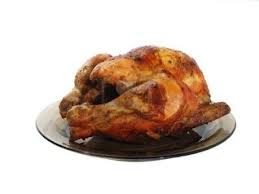
With our freshly cut pieces we divvy up the recipes and I get the whole bird to roast and stuff. There is a two-stage process to roasting. The temperature should be high at the beginning, than lower it. This creates a crispy skin and an evenly cooked interior. Steve shows me how to truss my bird, which preserves the shape, keeps the stuffing in place and equalizes the internal temperature. Once my roast is in the oven I learn how to fry, barbecue on a stick, cook under a brick, and make roulade (rolled) chicken.

My favorite time of class arrives and it is time to sit down and eat. We devour Indian spiced chicken with a yogurt raita, arugula salad with roulade of chicken stuffed with sundried tomatoes and goat cheese, my roast with cranberries, apples and walnuts stuffing served with a calvados cream, southwestern fried chicken, peppered chicken with hot and spicy ginger sauce and spicy stir-fried sesame chicken, green beans and shitake mushrooms with noodle cakes.

As we are cradling our stomachs, Steve offers “le trou Normande”—a shot of calvados to aid our digestion. “Le trou” means hole in French. In the Normandy region of France it is customary to drink this apple liqueur in the middle of a meal to make room for more food. Which means, I get to go back for seconds. Hurray! Every dish is delicious and juicy. My chicken repertoire has expanded and my riddle has been solved.

Posted in Food, Local, Personal Essays | Leave a comment

Scrap the Barilla: Make Your Pasta from Scratch

pasta

I went to Back to Basics cooking school at The Cambridge School of Culinary Arts a few years back and blogged about it for Misstropolis.com. The website no longer exists so I’m reprinting them here. Enjoy!

Day Seven

What is it about pasta that we love so much?

Certainly, it is inexpensive, filling, quick and foolproof. There’s a linguistic element, too, that harkens romance: the very words Tortellini, Ravioli or Linguine roll exotically off the tongue. But perhaps pasta’s role as the ultimate vehicle for olive oil, butter, cream and cheese trumps all that. In our house, each season features its own sauces. Winter means putanesca; in spring we savor asparagus, morels and cream. Simple fresh tomato, basil and mozzarella are summer night perfection, and it wouldn’t be fall without pumpkin ravioli smothered in sage and brown butter.

In the approximately 1500 times I have served pasta, never once have I made it from scratch. I lump the whole business in the “my last name maybe Baker but don’t ask me to make dough” category. I’m not going to go there. Correction: I wasn’t gonna go there, until Steve Nil at the Cambridge School of Culinary Arts gave me a nudge from behind.

“Back to Basics II” begins in the classroom with a lesson in Italian geography. I never gave much thought to the very interesting fact that there is a wheat belt in the middle of Italy where durum wheat is grown and artisanally crafted. The terroir in this region yields dry pasta that is chewy, flavorful, dense and textured. We sample coarse De Cecco, less coarse Montebello and U.S. market leader Barilla, which is smooth as silk.

Pasta-cooking essentials are a list of dos and don’ts. Do salt the cooking water heavily, like seawater. Do stir the pasta after you add it to the water, so it doesn’t clump. Don’t overcook pasta: there should be a faint color of white in the middle of the noodle. Don’t rinse the pasta when it has finished cooking, because the gluten and salt that would wash away are essential not only for flavor, but for sauce integration. Do use a spider, or spoon skimmer, to scoop pasta right from water to sauce; this helps it retain its moisture.

Lesson over, lesson learned: it’s on to the test kitchen and pasta making. We make a well in a soft mound of flour, to which we add three eggs and a sprinkle of salt. We stir it with a fork, gradually drawing more flour from the walls into the well. Once a ball is formed, we knead it for ten minutes. I push the ball down with the heel of my hand, fold it over, turn it one quarter and repeat. It’s tough work and my shoulders ache. We check for bubbles (there are none) and texture–it’s as soft as a baby’s bottom. In the meantime Steve (that rat) makes his dough in the KitchenAid standing mixer in three minutes.

The pressing and cutting of the pasta dough is an art unto itself. My square emerges from the pasta roller looking like a long, wet sock. Steve’s assistant, Liz, laughingly likens it to Italy’s boot. I let these long lasagna strips dry, then feed them through the spaghetti-cutting attachment. In an amazing stroke of luck, my long boots morph into perfectly formed spaghetti. I dip the noodles in flour and arrange them in a mound. They cook in just a few minutes, and I transfer them directly from pot to sauce.

My classmates and I fill our warmed platters with conchieglie al forno with veal and mushrooms, spaghetti aglio e olio, tagliatelle tre colore with proscuitto and red peppers, fennel and endive lasagne, orchiette with sausage and broccoli rabe and squash ravioli with brown butter and hazelnuts. Take note readers: every dish tastes even better then it sounds. I bravely resist thirds, but stuff my containers gladly (and greedily) with leftovers. An afternoon snack looms on the horizon, and maybe…just maybe, a new KitchenAid. It’s true the sauces were sublime, but today, the freshly made pasta was the real star.

Tomorrow: chicken

Posted in Food, Local, Personal Essays | Leave a comment

The Secret to Perfect Sauces

I went to Back to Basics cooking school at The Cambridge School of Culinary Arts a few years back and blogged about it for Misstropolis.com. The website no longer exists so I’m reprinting them here. Enjoy!

images

The everything-you-need-to-know-about sauces book.

Day Six

Shakespeare said, “The sauce to meat is ceremony; Meeting were bare without it.” In Medieval times, sauces were more than ceremony, however. They were used to disguise the taste of food, much like perfume was used to hide someone’s odor. These days, sauces are meant to be the supporting actor: They ought to enhance food, not overpower it. For me, sauces are nostalgic: Hollandaise conjures up the Eggs-Benedict Christmas mornings of my childhood. And I’ll never forget the buttery polenta blanketed in Taleggio and wild mushrooms that my husband and I ate in a hillside town outside of Venice.

I wouldn’t necessarily call myself sauce-challenged but many of my favorites—the artery-clogging, classic French sauces like béarnaise–have always eluded me. Making sauces like these require time, focus, and calm not characteristics I often possess at the dinner hour. As a result, we relegate sauces to special occasions. Day Six of the “Back To Basics” cooking class at the Cambridge School of Culinary Arts means to change all that.

Instructor Steve Nill introduces “Sauces” with a history lesson. In the mid 1800s, French chef Antonin Careme systematized four mother sauces: espagnole, veloute, allemande and béchamel. In the early 1900s, another French chef, Auguste Escoffier, standardized and codified the cooking of the 19th century and affirmed the importance of these mother sauces. He classified the four as espagnole, veloute, béchamel, and tomato, and to a lesser degree, hollandaise and mayonnaise. Because our “Back to Basics” curriculum is based on classical French tradition, tomato-based sauces don’t make the cut. But Steve provides a great aside: according to legend, the French stayed away from tomatoes because they feared them and were convinced that they made you crazy. Tomatoes were finally deemed acceptable in the mid-1500s, when Catherine de Medici introduced them from Italy.

After our history lesson, we head to the test kitchen to make these mother sauces and some of their derivatives, known as “small” sauces. My partner, Lauren, and I have been assigned the dessert portion of the meal: pears poached in red wine with crème anglaise and caramel. We start by peeling, coring and sanding the pears to give them a smooth look. The sanding, although laborious, is easy compared to the coring. No amount of stabbing, digging and twisting seems to get all of the seeds. My beautifully sanded pears end up looking like Swiss cheese. Not the challenge I expected in sauce class.

Then it’s on to the caramel. We heat sugar and water with a few drops of lemon juice over medium heat until we get a dark amber color. We add butter, whisking until it melts. We take the pan off the heat, count aloud to three, then add the cream and whisk again. Easy.

The crème anglaise, regrettably, is not as simple. There are many places to go wrong and we find them all. We whisk eggs yolks with sugar and a pinch of salt until the mixture is pale yellow and forms a ribbon (no ribbon–requires a re-do). We scald some milk, cool slightly and pour it in a steady stream over the egg yolk (requires a re-do–the milk is too hot). We place the mixture over heat, stirring constantly until it is smooth and coats the back of a wooden spoon. It should not boil (oops!) and the temperature should never exceed 180 degrees (oops again). After serious intervention by Steve’s assistant Dave, we finally arrive at a consistency, color and taste we can share with our classmates.

We ladle the sauce on to a platter, arrange our pears on top and drizzle them with caramel. We then sit down to eat poached eggs with chipotle-orange hollandaise, salmon in a wine court bouillon, grilled tenderloin with sauce Robert, crispy almond squid with sauce gribiche, chicken supreme allemande, crisp potato cannelloni with zucchini and shrimp in béchamel and our pears. Despite their battle wounds, our pears are delicious; the crème anglaise is lap-it-up liquid gold.

I head to my home kitchen, vowing to add more sauce to my repertoire. My crystal ball, aware that I’m sauce-challenged, remains skeptical.

Tomorrow: pasta

Posted in Food, Local, Personal Essays | Leave a comment

Did I Invite You to My (Winter) BBQ?

I went to Back to Basics cooking school at The Cambridge School of Culinary Arts a few years back and blogged about it for Misstropolis.com. The website no longer exists so I’m reprinting them here. Enjoy!

Unknown

Day 5

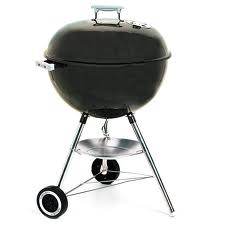
Barbecuing is a manly endeavor—like taking out the garbage. It dates back to the time when men were hunters and women were gatherers. Only now, instead of a woolly mammoth shot on the plains, we have pasture-raised, antibiotic-free, boneless chicken breasts bought from Whole Foods. The only hunting involved is for a parking spot on a busy Sunday.

Grilling has never been my thing and I am thankful for the very capable skills of my husband. While he mans the fire, I focus my efforts on making the perfect vinaigrette. But this division of labor has always been an irritant to my feminist side. So, it is with this desire for equality that I enter Day Five of the “Back to Basics” cooking class at The Cambridge School of Culinary Arts with Steve Nill (father of five girls!) at the helm.

Steve starts the class with a discussion of the different methods of dry heat cooking: broiling, grilling, roasting and pan-broiling. “Dry heat cooking is quick and great for tender cuts of meat,” he says. “Broiling requires a cold pan to start or the meat will stick. The thicker the meat, the further it should be away from the broiler.”  Steve’s first rule for grilling is to start with a hot, clean grill. The protein will tell you when it’s ready – when you can lift it easily off the grill, it’s done. That sounds easy enough except for the “talking” protein part (maybe that’s a male thing). We learn that roasting is ideal for large cuts of meat and when pan-broiling, don’t move the meat until it is seared. Like grilling, if meat sticks to the pan it is not ready. We also learn that meat needs to have air around it during cooking, and should never be crowded in a pan.

Steve says that the goal of dry heat cooking is to produce meat or fish that is tender and juicy, not tough and dry. Toward that end, he suggests that meat be at room temperature before cooking. The eyes and fingers of the cook are the best tools to determine if the meat is done. If it’s rare you will see blood droplets and it will feel squishy. If it’s medium rare you will see blood coming to surface and feel a little resistance when you pinch. If it’s medium, the juice is at the surface and if you poke it, it bounces back. If it’s well done, there is no juice, and it’s stiff to the touch (corpse-like). You may go hungry, but Fido will be happy.

Next we head to the test kitchen to try our hands at dry heat cooking. My partner, Lauren and I, quickly volunteer to make the diablo skirt steak. The recipe looks simple enough: an easy marinade tossed with the meat in a big plastic bag for ½ hour. Heat the grill to high. Cook 3-4 minutes on one side and finish with 2-4 minutes on the other. Slice thinly against the grain. Seems like child’s play. Years of mastering complicated recipes ought to fill me with confidence; I’m just grilling a simple piece of meat, after all. Yet I still feel like I stepped onto someone else’s turf.

The time arrives to test my mettle. Christian, the singing chef, hovers near us for moral support. Today for some reason, his presence is unnerving. Maybe it’s because he is a dexterous griller who elevates barbecue to an art form. Or, maybe it’s because he is the proud owner of so many barbecues – including a Big Green Egg Smoker – that I feel insecure. The seconds tick away on the clock, and I poke the meat. It has been grilling for more than four minutes, and it’s still squishy. Christian suggests I flip it. Ten minutes go by, and now I can’t tell whether it is squishy, bouncing back or stiff. I think longingly of the meat thermometer I once gave my husband for Christmas that he never deigned to use. Then, Christian eyeballs my steak and exclaims, “Now!” I pull the meat off, and slice into it. It’s perfect, but I’m rattled.

Lauren and I put the steak on a warm platter with the salsa on the side and then sit down to eat. In addition to our steak, platters brim with honey spiced pork roast, Indian flavored grilled vegetables with paneer, and grilled swordfish verde. The finale – grilled cranberry-orange zinfandel bread with orange mascarpone cream – is astonishingly wonderful.

Despite my success in the test kitchen, I remain tentative about grilling and still feel the tiniest bit out of place when I’m in charge of what’s going on over the coals. A little more practice with these new skills will soon take care of that. In the meantime – and please don’t tell Gloria Steinem – husband will still man the fires in our house.

Tomorrow: sauces

Posted in Food, Local, Personal Essays | Leave a comment

Stewed About It: Braising for Beginners

This is my favorite braising cookibook

This is my favorite braising cookibook

Day Four

Stew is soup’s hard-working cousin — succulent, warm and hearty. Tough and unrefined at the beginning, mellowed and presentable at the end, stew is Eliza Doolittle personified. For me, it is a crowd pleaser that comes with a whiff of nostalgia.

The summer after my mother died, when I was eight years old, my Navy Captain Dad decided to make boeuf bourguignonne for my brother and me. I can still remember the sounds, the smells and the anticipation we felt as he chopped and diced away in the galley kitchen of our rented flat in Newport, Rhode Island. The meal lived up to all of my expectations—tender and intensely flavorful. Since Dad had quadrupled the recipe, there were leftovers to be had and then some. We ate it the next night, the night after that, the night after that, and by the time it was all gone—after so much freezing and defrosting–it had acquired the consistency of canned dog food and a new name, Barf Burgundy.

Many years later, my husband and I saw a fresco in Italy depicting Hell as a bunch of bad guys in a big pot, being cooked over a fire. Bad Guy Stew entered our family vernacular—our version of being in the doghouse.  But all things tough, even miscreants, can tenderize with time, some liquid and a heavy pot. I have eaten many stews since that summer night 33 years ago, and I have been in Bad Guy Stew often enough but I have never actually made a stew myself.  Steve Nill at the Cambridge School of Culinary Arts is happy to show how it’s done on Day Four of his “Back to Basics” class.

Steve starts the class with a discussion of the different methods of moist heat cooking: braising, stewing, blanquettes and fricassees. “Braising,” he says, “is typically used to cook tougher pieces of meat—the working parts of the animal. These muscles contain a lot of hard, white connective tissue called collagen, which breaks down into very tender gelatin under the slow process of moist heat cooking.”  With braising, we learn that the meat usually goes into the pot whole with liquid added halfway up the sides. Aromatics are added at beginning and strained at the end.  With stews, the meat is cut into serving size pieces and covered with liquid. Aromatics are added only at the end.

Steve’s instructions for braising are:

Trim excess fat off meat and sear on all sides in butter or oil; do it in batches if necessary so as not to crowd the pan.

Remove meat, deglaze pot with wine or other liquid and scrape up yummy brown bits.

Put meat back in pan, fill pan with a liquid half way up the side of meat and bring to a simmer.

Put inverted lid (parchment paper first with aluminum foil on top–shiny side down) right on top of meat.

Cook in the oven at 325 degrees or less until meat is fork tender with no resistance.

Take meat out; strain out aromatics.

Use a bulb baster and suck the good stuff from the bottom of the pot, leaving the fat behind. Make a sauce, if you like, with the de-fatted liquid.

In the test kitchen, I quickly volunteer to make Braised Short Ribs with Dried Cherries. After a sublime short ribs experience at Casablanca restaurant in Cambridge, Massachusetts, two years ago, I have been on a quest for a worthy challenger. My partner Lauren and I brown the meat in batches. We then deglaze the pan with wine as Christian, our singing chef, melodies the praises of the brown bits at the bottom of the pan. We put it all back into our large enamel casserole with liquid halfway up. We cover the mixture with an inverted foil lid topped by the enamel lid that goes with the pot. While the short ribs braise in the 325 degree oven for 2 hours, we learn how to cut fennel and baby artichokes. We also learn to separate cilantro leaves from their stems with minimal effort.

At long last, it is time to sit down. I skip over the fricassee de lapin, pork and butternut squash stew, poulet au vinaigre a l’estragon, sea bass over fennel, red cabbage and artichokes and dive, fork first, into the short ribs. Mmmm.  Casablanca, I’ve met your match.

Tomorrow: dry heat cooking

Posted in Food, Local, Personal Essays | Leave a comment

Recession Special: Soup

GetAttachment.aspx

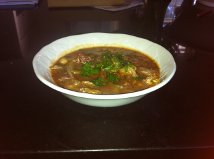
This is the chickpea, tomato and bread soup from Yotam Ottolenghi’s sublime cookbook, Plenty. Delicious!

Day Three

Soup: glorious, versatile, wholesome. Smooth, refined and velvety, soup can be served in your finest china. Chunky or spicy, it can be spooned from your favorite thermos. It is cool, crisp and refreshing in the summer, warm, hearty and nourishing in the winter.

Judith Martin (aka Miss Manners) puts it this way: “Soup does its loyal best, no matter what undignified conditions are imposed upon it. You don’t catch steak hanging around when you’re poor and sick, do you?”

Soup is the perfect B.O.B.S. meal—short for “Best of a Bad Situation.” My husband Tim and I coined this phrase while traveling in Costa Rica.  At a nondescript restaurant, we were served something that looked like it was resurrected from the compost pile. Tim took the slop on my plate, mixed it with the slop on his plate, added every hot sauce and spice he could lay his hands on, tossed it vigorously and voila!  Sure, it still looked like compost, but the taste was out of this world.

With a little stock, some spices and a blender, you too can transform random leftovers like chicken carcasses and limp vegetables into a lovely soup. Add a simple salad and a warm baguette, and the situation goes from bad to great.

Great situations notwithstanding, I have a confession to make. In 21 years of cooking, I have never, ever, made my own stock. I know, I know–it is supposed to be easy and it gives that essential depth of flavor that makes a soup sing. But I have always opted for the lazy way out: I pull back the plastic box tab and pour.

It is with this guilt that I walk into Day Three of my “Back to Basics” cooking class at the Cambridge School of Culinary Arts. Instructor Steve Nill stands at the front of the classroom with a tray of tiny plastic cups filled with chicken stock. He hands out four samples to each of us. Three are store-bought: Pacific Foods Organic, College Inn, and Swanson Certified Organic; the fourth is homemade. For the record, toothpaste and chicken stock aren’t the best taste combination at 9:30 a.m.  However, the winner is obvious—the homemade. As for the others, Swanson Organic tastes the most like chicken. One other, which shall remain nameless, tastes a bit like the water that splattered into my face when my husband cleaned the gutters last spring.

After our taste test, Steve asserts that anyone who likes to make soups will eventually be drawn to stock making, because great stocks mean better soups. He continues, “Stock is a flavorful liquid resulting from the proper extraction and concentration of fats, oils, juices and liquid compounds from various organic sources; generally bones, vegetables, meat and fish. Spices, herbs and aromatics are often added to create more complex flavors. Water and sometimes wine are used for liquid.”

Meat stocks, we learn, take at least three hours to make. As we don’t have that much time in our class, Steve gives us detailed instructions and some tips: 1. Always add cold water to the meat or poultry when making stock. Water should barely cover the bones. 2. Add vegetables/aromatics after initial skimming. 3. A stock is simmered, not boiled. 4. Don’t add salt. Always season the sauce or soup later. 5. Strain everything. 6.When stock is cool, the fat will rise to the surface and can be removed.

Then, we head over to the kitchen to try our hands at soup making. Christian, a student in the professional program at the school and an old friend of mine, has made the stock that simmers on the stovetop. As my partner Lauren and I dice bacon and peel potatoes for fennel corn chowder, Christian breaks out in song. His voice is like the stock on the stove–rich, clear and full of depth. There is nothing better than this–a simple recipe, a homemade stock and a singing chef.

Finally, my favorite time of class arrives. We sit down to eat our soups: southwest squash, fennel corn chowder, lentil and brown rice, panade, onion au gratin, and cream of potato with pesto. It is true; they all have a depth of flavor that I don’t get at home. Maybe during the next blizzard, when I can’t leave the house, I will try to make my own stock. Until then, with two small children and a busy life, I’ll probably continue to go store-bought. Shhh.

Tomorrow: braising

Posted in BOBS, Food, Local, Personal Essays | Leave a comment

Cracking Eggs

eggI went to Back to Basics cooking school at The Cambridge School of Culinary Arts a few years back and blogged about it for Misstropolis.com. The website no longer exists so I’m reprinting them here. Enjoy!

Day Two

I have always loved eggs. Not only are they beautiful, they are fun. Once, I fried one on the streets of San Diego. They are fragile and messy, especially when they’ve found their way to the kitchen floor. They are magical—they can be transformed from a runny mess into a soufflé. They are light and fluffy in a scramble, or structured and firm in a meringue. They can be dangerous if you have high cholesterol or they have salmonella. Whether it’s eggs benedict smothered in hollandaise, silky crème anglaise, or the elemental but perfect, soft-boiled egg on toast, nothing is as versatile, nutritious and astoundingly delicious as that simple little package: the egg.

“Although I cannot lay an egg, I am a very good judge of omelets.” I didn’t say that-George Bernard Shaw did- but I concur.  I know the difference between homemade mayonnaise and Hellmann’s. I can smell the difference between a fresh and a rotten egg. Knowing doesn’t mean doing as I learned in last week’s knife skills class. So, this week Steve Nill at the Cambridge School of Culinary Arts is my guide to egg enlightenment.

Steve starts the class on eggs with some pointers on safety. “The most common contributors to salmonella poisoning are time and temperature abuse, cross contamination and personal hygiene,” he says. I learn that an average consumer might encounter a contaminated egg once every 84 years. Pretty good statistics, but that doesn’t mean I’m necessarily good for another 43 years of cookie dough. I should probably curb my habit.

The bottom line protocol for egg safety is: refrigerate, wash your hands, wash your cutting board and cook to the right temperature. Further, if you’ve thrown out the carton and have doubts about an egg’s freshness, drop it into a bowl of water. It’s good if it sinks; if it floats, it’s garbage.

Steve demonstrates his three-bowl egg separation method (extra dirty dishes, thankfully, are not a problem in cooking class). Then, we move to the stainless steel table in the kitchen where we are assigned a recipe and a partner. Lauren is a 30 year old, recent transplant from San Francisco with big beautiful eyes, a warm smile and self-deprecating humor.  She and I are the designated quiche-makers. We start by making a pate brisee, or short pastry, for our crust. We pile flour and salt on the countertop and add butter with our fingers. We form a trough down the middle, and add water a tablespoon at a time.  We fluff it—with our fingers once again– until it is the right texture.

While our dough chills in the refrigerator and blind bakes in the oven, we learn how to poach an egg and flip a crepe.  We observe a soufflé in the works: Steve whips egg whites in a copper bowl. We take turns helping, until carpal tunnel and complaints set in. Unfazed, Steve turns the bowl upside down, and nothing falls out. They are perfect. Next, Steve constructs an aluminum foil collar, coated with butter and grated cheese, that extends about three inches above the soufflé dish.  This prevents the rise from spilling over the sides.

While the soufflé bakes, we concentrate on scrambled eggs. “The key is low heat and a lot of patience,” Steve says. We learn that the opposite is true with omelets, which require speed to avoid overcooking. Mystery solved: my scrambled eggs taste like omelets because I have been using the high heat, impatient-Mom method.

Lauren and I remove our pate brisee from the oven, where it has pre-baked. We let it cool to room temperature, while we whisk eggs blended with whole milk, Swiss cheese, salt, pepper and nutmeg. We pour the mixture into its shell, topped with diced tomatoes and chiffonade basil.  We put it back into the oven, and after about thirty minutes my stomach starts to growl and my mouth waters uncontrollably.  This whole place smells like Sunday brunch and I am starving.

At last, we gather serving dishes from the warmer (such a nice touch) garnish our creations and sit down to eat this orgy of eggs. There is soufflé, quiche piperade, scrambled eggs, frittata di cipolle and eggs benedict. Although my quiche was a little under-seasoned, the raves were otherwise unanimous. After practically licking my plate, my stomach and I waddle out together, in mutual awe of the egg.  Back at home, I vow to go on a 24-hour fruit fast.

Tomorrow: soup

Posted in Food, Local, Personal Essays | Leave a comment

Getting a Grip: The Business of Knives

3284369_2cc1c8ba04_mI went to Back to Basics cooking school at The Cambridge School of Culinary Arts a few years back and blogged about it for Misstropolis.com. The website no longer exists so I’m reprinting them here. Enjoy!

Day One

I have been cooking nutritious and creative food for friends and family for 20 years.  I think all fed would agree that they are preprogrammed to expect only the best when they arrive for a meal.

Along the way, I have picked up tips from cookbooks, magazines, and friends. I eavesdrop at the fish and meat counters, and pester chefs at my favorite restaurants for their advice and insight. And yet, for all of the tasty and adventurous meals I have created, few have been perfect.

Mind you, I don’t aim for Martha Stewart perfection, and in fact, I relish my supply of mismatched napkins and odd-sized glasses.  For me, it has always been about the food and I am my own worst critic.  Sometimes I feel that my dishes lack depth of flavor. Other times, the seasonings might be right but the meal is all the same color. And so on. So, after two decades of cooking by the seat of my pants, I decide to take action.  I enroll in a six-week “Back to Basics” cooking class at The Cambridge School of Culinary Arts.

Day One. I walk into a large room with desks at one end and a professional kitchen at the other. It is surprisingly un-fragrant, considering that this is a kitchen that has seen a lot of action. Eighteen of my fellow cooking students sit at their own desks and face a counter with a large adjustable mirror above it, positioned so that we can see our instructor Steve’s hands.

Steve Nill is a tall, handsome man in his 50s with a grin that suggests total job satisfaction.  At odds with that is Steve’s assertion that kitchen work is a young person’s job complete with low pay, few benefits if any, and a great deal of stress.  He adds the occupational downer that you’re always at work when your friends are at play.  Steve wears a chef’s uniform of checkered pants and double-breasted white jacket topped off with a toque—a hat that evokes a perfectly risen soufflé. His enthusiasm indicates that it is unlikely he will ever return to his previous career- in finance.

GetAttachment-1.aspx

Introducing Steve Nill…

We get down to the business of knives.  “The four must-have knives of every kitchen are a chef’s knife—preferably 8 inches; a boning knife, a serrated or bread knife, and a paring knife.”  Steve demonstrates the most stable and controlled grip: grasp the handle with three fingers and hold the blade between the thumb and index finger. Horror and relief hit me simultaneously; although I have been holding my knife incorrectly for twenty years, I haven’t shed any blood because of it. In fact, I have managed to escape with only two kitchen injuries, neither of which involved knives (don’t ask).

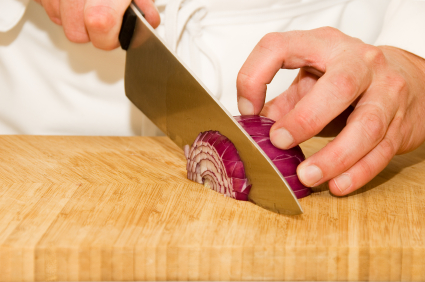
Steve also demonstrates proper knife sharpening, on a stone at a 20-degree angle.  After a few words about knife safety, he shows us some basic dicing, mincing, and slicing techniques including how to cut an onion properly (tears notwithstanding).

Then, we gather around the large stainless steel table in the middle of the kitchen to practice. There’s a designated area for each of us, complete with apron, cutting board (secured to the counter by a rug pad fragment), 8-inch chef’s knife, a paring knife and, according to Steve, the essential “y”-shaped vegetable peeler. We are told to face the counter squarely and grip the object to be cut with our “claw” (thumb tucked under so it doesn’t accidentally end up in the sauté pan).  The claw feels awkward and I develop a slicing pain across my upper back. Steve tells me to relax, but the combination of claw grip, sharp knife and roomful of strangers makes this easier said than done.

At the end, we sit down together at a long table and eat our experiments—minced garlic on bread, diced pear-zucchini soup and perfectly julienned French fries. We are especially thankful that the food is flesh-free. I have a lot to learn.

Tomorrow: eggs

Posted in Food, Local, Personal Essays | Leave a comment